 Xtoys
XtoysBound to Please Bondage Tape Black Review: Self-Cling Restraint
Editor's opinion
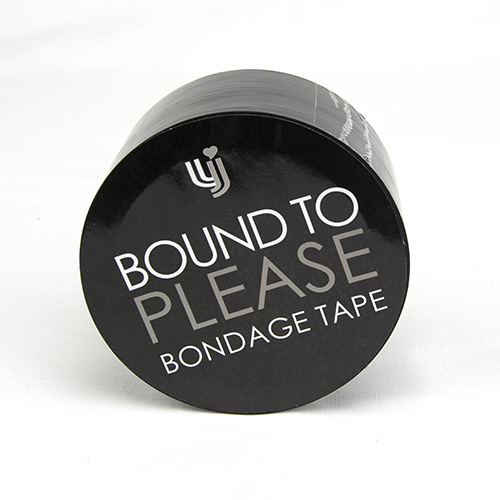
Bound to Please Bondage Tape is an inexpensive, beginner-friendly introduction to restraint that clings only to itself, so removal is clean and comfortable. It suits curious couples and casual players who want flexibility without buckles, though PVC is not the most durable material and it holds far less tension than proper cuffs.
Bondage tape sets out to solve a real problem for anyone new to restraint play: how do you tie someone up without knots that tighten, straps that need adjusting, or adhesive that pulls at skin and hair. This roll answers that with a self-clinging PVC film that sticks firmly to itself and to nothing else.
The appeal is obvious, but it is worth thinking about what self-cling actually delivers. It is forgiving and easy to remove, but that same quality means it is not a locking restraint. Understanding where it sits between novelty and serious kit is the key to buying it wisely.
The good and the bad
What works
- Clings only to itself, so no pulling on skin or hair
- Twenty metres gives plenty of room to experiment
- No adhesive means you can reposition as you go
- Re-useable, so one roll lasts across many sessions
- No batteries or setup required
What to be aware of
- PVC is less durable than leather or nylon gear
- Self-cling holds less securely than buckled cuffs
- Tape can loosen or slip with vigorous movement
- Wraps too tightly can restrict circulation if you are careless
Buy it if
Couples new to restraint who want a low-cost, low-commitment way to explore tying and improvised fetish wear without buying dedicated gear.
Skip it if
Anyone wanting firm, reliable restraint that stays put under real resistance should look to proper padded cuffs or rope instead.
Design and materials
The tape is a smooth PVC film in classic black, five centimetres wide, that clings to itself through static and surface grip rather than any glue. That is the whole idea: it wraps and holds against its own layers, then peels apart cleanly when you are done, leaving nothing on the skin.
PVC is worth understanding for what it is. It gives that glossy, uniform fetish look and holds its shape under gentle tension, but it is a thinner, less hard-wearing material than leather or heavy nylon. Handled roughly or stretched hard, it can tear, which is part of why it is priced and positioned as an accessible starter rather than heavy-duty equipment.
How it is meant to be used
Wrapped around wrists, ankles or limbs, the tape forms restraints that feel secure enough for playful binding without the fuss of fastenings. Because there is no adhesive against the body, you can adjust as you go and unwind it in seconds, which is genuinely reassuring for first-timers.
One practical caution: any wrap around a limb should never be pulled tight. The self-cling grip is gentle by design, so the temptation is to compensate by wrapping harder, and that is exactly what can restrict circulation. Keep it snug, not constricting, and always keep a pair of scissors within reach as a matter of habit. Beyond restraint, the long roll lends itself to layering into improvised tops, cuffs or accessories for the look alone.
Care, longevity and comparison
There are no batteries and nothing to charge, so it is ready straight off the roll. To keep the cling working, store it away from dust and heat, and re-roll it tidily after use rather than leaving it bunched. Grit and fluff are the enemies of a self-clinging surface.
Compared with the usual alternatives, it sits below buckled cuffs and rope on both security and durability, but well above them on ease and forgiveness. If your interest is the aesthetic and the experience of binding rather than genuine inescapable restraint, tape earns its place. If you expect it to hold against someone actively pulling free, it will not, and that is a design fact rather than a flaw.
Who gets the most from it
This is squarely a starter and a scene-setter. It rewards people who value the ritual of wrapping, the visual of black PVC and the freedom to improvise, and who are relaxed about the tape being a soft restraint rather than a hard one.
Experienced players will still find uses for it, particularly for creating clothing and decorative binding, but they will already know it is not a substitute for their heavier kit. For a couple testing the water, it is one of the lowest-risk ways to find out whether restraint appeals at all.
The bottom line
As an affordable, forgiving entry point into restraint, Bound to Please Bondage Tape does its job well: twenty metres of self-clinging PVC that grips itself, spares skin and hair, and comes apart cleanly. Buy it to explore and to enjoy the look, but treat it as a soft restraint and upgrade to cuffs or rope if you want something that truly holds.
Frequently asked questions
Does the tape stick to skin or hair?
No. It is designed to cling only to itself, so it will not pull at skin or hair and comes away cleanly. This is its main advantage over adhesive tapes.
Is it strong enough to stop someone escaping?
Not reliably. The self-cling grip is gentle by design, so it can loosen or slip under real resistance. It suits playful binding and the fetish aesthetic rather than genuinely inescapable restraint.
Can it be re-used?
Yes. It is intended to be unwound and re-used many times. Store it clean, dry and away from dust so the clinging surface keeps working.
Is it safe for beginners?
It is one of the more forgiving options for newcomers, since it removes quickly and needs no knots. Never wrap it tightly around a limb, keep it snug rather than constricting, and always keep scissors nearby.
How much tape do you get?
The roll is 20 metres long and 5cm wide, which is generous enough to bind multiple areas or create layered designs and improvised clothing in a single session.