 Xtoys
XtoysBound to Please Open Eyed Hood Review: A Flexible Way Into Sensory Play
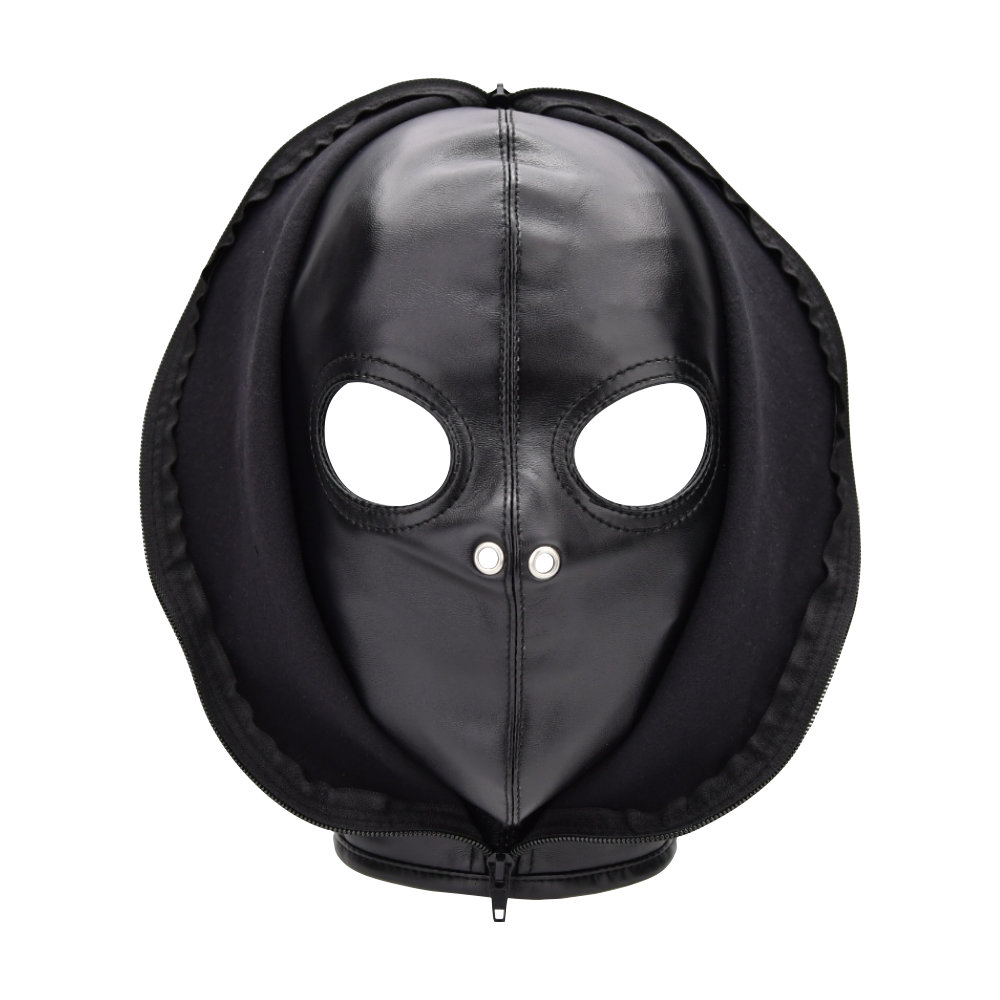
Editor's opinion
This is an entry-friendly sensory hood that lets you dial the intensity up or down, thanks to a zip over the eyes and a laced back that adjusts the fit. It suits couples curious about control and restraint who want breathing kept comfortable throughout. The PU material and one-size design mean it is more accessible than fitted leather hoods, but also less durable and less precise in fit.
The Bound to Please Open Eyed Hood sets out to make sensory play approachable rather than extreme. Its defining idea is adjustability: eye openings and nostril holes keep the wearer seeing and breathing during lighter sessions, while a zip lets you close off sight when you want deeper deprivation.
For a buyer, the questions worth weighing are how well a one-size hood with a laced back will actually fit, what PU means for comfort and longevity, and whether the graduated approach genuinely suits the kind of play you have in mind. Those are the details that separate a hood you reach for again from one that lives at the back of the drawer.
The good and the bad
What works
- Zip over the eyes lets you move from partial to full visual deprivation within one scene
- Nostril holes keep breathing clear and unrestricted throughout
- Laced back adjusts to different head shapes and preferred tightness
- One-size, no-power design makes it simple and accessible for newcomers
What to be aware of
- PU is less breathable and less durable than leather over time
- One size relies entirely on the lacing, so very large or small heads may struggle for a secure fit
- Zip and lacing near the face need care and attention during use
- No hearing restriction despite the sensory deprivation billing
Buy it if
Couples new to sensory play who want a hood that starts gentle and can be taken further, with breathing kept comfortable and the intensity easy to adjust mid-scene.
Skip it if
Anyone wanting a precisely fitted, hard-wearing hood for regular intensive use should look at moulded leather or neoprene options instead, and those seeking genuine sound deprivation should note this design does not cover the ears.
Design and materials
The hood is made from PU with a smooth outer finish, a synthetic that keeps the cost and weight down compared with leather. The trade-off is that PU is generally less breathable and less resistant to wear, so it benefits from gentle handling and will not age quite like a leather piece.
The standout design feature is the eye zip. Open, it leaves the wearer able to see; closed, it shuts out sight for fuller deprivation. Nostril holes stay clear throughout, which is the sensible safety-minded choice for a hood aimed at less experienced players.
How it is meant to be used
The intended flow is straightforward: slip the hood on, tighten the laced back until it feels secure, then choose whether to leave the eye zip open or closed depending on the mood. The lacing is what makes the single size work, drawing the hood in to suit the individual head.
Because the zip sits over the eyes and the lacing runs up the back, both need attention when fitting. Take a moment to check the zip pull is easy to reach and operate, and agree how the hood comes off quickly, as you would with any restraint gear.
Care and storage
PU is easy to keep clean: wipe the surface with a damp cloth after use and let it dry fully before it goes away. Because it is a smooth synthetic, it does not need the conditioning a leather hood would.
Store it flat or loosely rolled and keep it clear of sharp objects that could scratch or mark the finish. Creasing and pressure over time are the enemies of PU, so a little care here extends its life.
How it compares
Against leather hoods, this is the more affordable and forgiving option, particularly for people testing whether sensory play appeals before committing to something pricier and more permanent. Leather fits more precisely and lasts longer but asks more of both budget and upkeep.
Within its own class, the graduated zip design is its selling point. A plain blindfold gives you sight deprivation with none of the enclosure; a fixed closed hood gives enclosure with no easing-in. This aims for the middle ground, letting one piece cover both moods. Just be clear that it restricts sight, not sound.
The bottom line
The Bound to Please Open Eyed Hood is a sensible, adaptable starting point for couples curious about enclosure and control, with the zip and lacing offering real flexibility over intensity. Go in knowing that PU trades durability for accessibility, that the fit depends heavily on the lacing, and that it deprives sight rather than sound. Within those limits, it does a genuinely useful job.
Frequently asked questions
Does the hood restrict breathing?
No. The nostril holes are designed to stay clear at all times, so breathing remains comfortable whether the eye zip is open or closed. As with any hood, keep communication and a quick means of removal agreed in advance.
Will one size fit most people?
The single size relies on the laced back to draw the hood in to the wearer, so it adapts across a range of head shapes. Very large or very small heads may find the fit harder to get secure, since there is no alternative sizing.
Does it block out sound as well as sight?
It is built around visual deprivation via the eye zip and does not cover the ears, so it will not meaningfully block sound. If hearing restriction matters to you, plan to pair it with something else.
How do I clean and look after it?
Wipe the PU surface with a damp cloth after use and let it dry completely before storing. Keep it flat or loosely rolled, away from sharp objects, to protect the finish and extend its life.
Is this suitable for beginners?
Yes, it is one of the more approachable hoods, since you can leave the eyes open for a lighter session and close the zip only when you both want to go further. Start gentle and build up as confidence grows.