 Xtoys
XtoysBound to Please Bondage Rope Black Review: Soft Cotton for Rope Beginners
Editor's opinion
This is a soft, natural-fibre rope aimed squarely at people learning rope play, with a generous 10-metre length for simple ties and decorative work. Cotton is forgiving and comfortable, but it needs proper drying and care, and a single length only takes you so far as your ambitions grow.
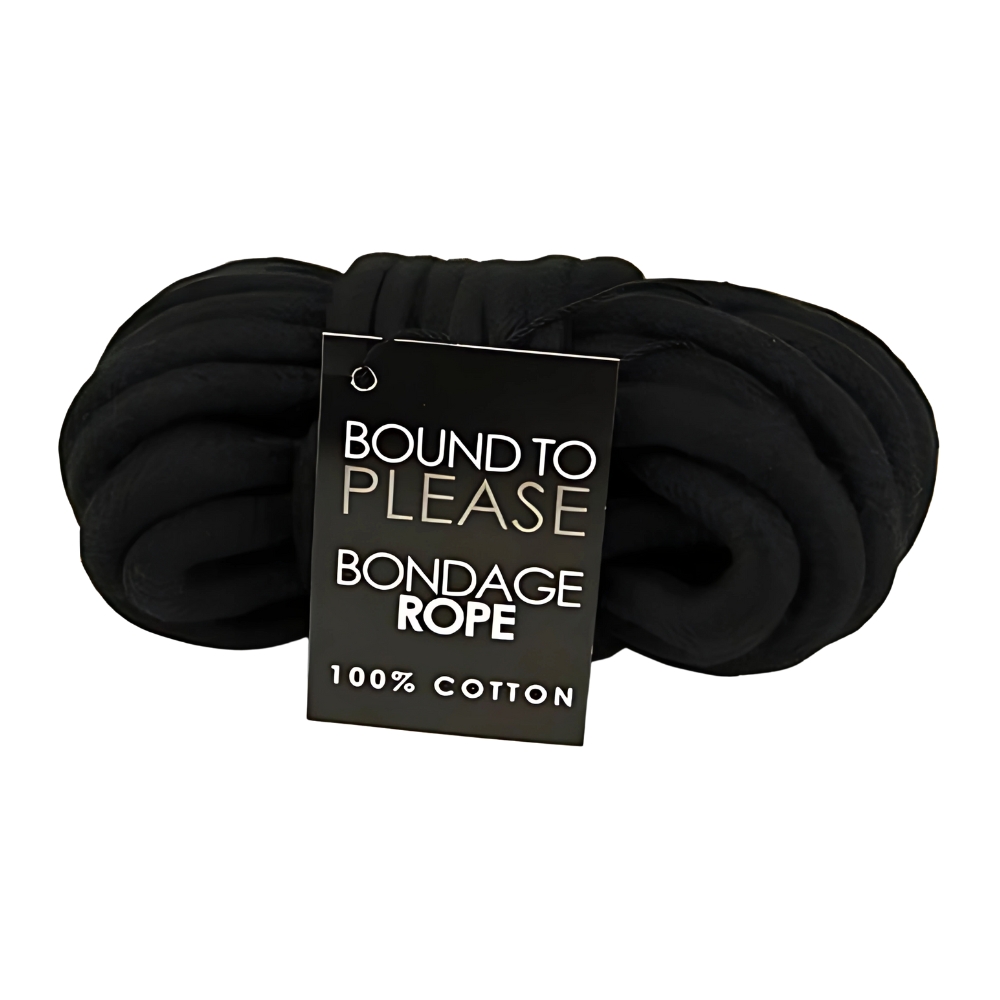
Rope is one of the oldest and most versatile tools in restraint play, and the appeal is easy to understand: no batteries, no moving parts, just length and technique. This Bound to Please rope is a 100% cotton line measuring 10 metres, positioned as a friendly entry point for anyone curious about Shibari, decorative knot work, or straightforward restraint of a willing partner.
The questions worth weighing are less about the rope itself and more about what cotton means in practice, whether 10 metres is enough for what you have in mind, and how much care you are prepared to give it. Rope is cheap to buy and easy to underestimate, so it pays to know what you are getting.
The good and the bad
What works
- Soft natural cotton is gentle on the skin and easy on the hands
- Generous 10-metre length suits simple ties and some decorative work
- Forgiving to handle, making it well suited to beginners
- No power or accessories needed, so nothing to charge or replace
- Grips knots well, which helps them stay put once tied
What to be aware of
- Cotton absorbs moisture and must be dried thoroughly to avoid mildew
- A single 10m length limits the more ambitious suspension-style ties
- Natural fibre can fray over time and needs careful storage
- Requires learning proper technique to use safely
Buy it if
Newcomers and intermediate enthusiasts who want a comfortable, manageable rope for wrist and body ties, basic Shibari and decorative knot work with a partner.
Skip it if
Anyone planning full suspension or complex multi-line ties, who will want several dedicated lengths and may prefer treated jute or specialist rope. If you want a fibre you can machine-wash without fuss, a synthetic alternative may suit you better.
Design and materials
The rope is 100% cotton, a natural fibre chosen here for softness. Compared with stiffer synthetic ropes, cotton is more pliable and sits more kindly against the skin, which is why it is often recommended for people finding their feet with restraint. It also grips itself well, so knots are less inclined to slip once tied.
The trade-off is that cotton is a soft, absorbent fibre. It is less abrasion-resistant than jute or hemp and can pick up moisture readily, which matters for both hygiene and longevity. The black colouring is practical for hiding marks, but the underlying character of the rope is still a natural fibre that wants looking after.
How it is meant to be used
At 10 metres, this is a sensible single length for wrist and ankle ties, chest harnesses, and decorative wrapping. That is plenty for the kind of ties most beginners and intermediate users are working towards, and enough that you are unlikely to run short in the middle of a simple pattern.
It is worth being clear about limits. More advanced rope work, particularly anything involving suspension, calls for multiple longer lines and rope with proven load characteristics, and should only be attempted with proper training. Treat this as a rope for floor work and restraint rather than anything that takes a person's weight.
Care and cleaning
Cotton's comfort comes with maintenance. The rope should be kept clean and dry between uses and stored neatly coiled to prevent tangling and kinking. Because the fibre absorbs moisture, thorough drying after any cleaning is essential to avoid mildew, which can develop unseen in a coil that has been put away damp.
Over time, expect some fraying at the cut ends, which is normal for natural rope. Keeping the ends tidy and inspecting the length for weak spots before each use is good practice, both for the rope's life and for safety.
How it compares
Against synthetic ropes such as nylon, cotton feels softer and more natural in the hand but is less durable and needs more careful drying. Against traditional Shibari fibres like jute and hemp, cotton is gentler on the skin and easier for a beginner to manage, though purists tend to prefer the grip and aesthetic of treated jute once they progress.
As a first rope, cotton earns its place precisely because it forgives inexperience. Many people keep a cotton line even after they add other materials, simply because it is comfortable and undemanding for casual play.
The bottom line
As a beginner-friendly rope, this Bound to Please cotton line does the sensible thing: it is soft, easy to handle and long enough for the ties most newcomers want to learn. Go in understanding that cotton demands proper drying and careful storage, and that a single length is a starting point rather than a full kit, and it is a reasonable first buy for anyone exploring rope play at floor level.
Frequently asked questions
Is this rope suitable for complete beginners?
Yes. Cotton is one of the more forgiving fibres to learn on, being soft and pliable and easy to adjust. Beginners should still learn safe tying technique and avoid restricting circulation, and keep safety scissors nearby to cut free quickly if needed.
Can I use this rope for suspension?
No. This is best treated as a rope for floor work, restraint and decorative ties. Suspension takes a person's full weight and requires specialist rope, multiple lines and proper training, so it is outside the scope of a single cotton length like this.
How do I clean and store cotton rope?
Keep it clean and dry between uses, and ensure it is fully dried after any cleaning, as cotton absorbs moisture and can develop mildew if put away damp. Store it neatly coiled to prevent tangling and kinking.
Is 10 metres enough?
For wrist and ankle ties, simple harnesses and decorative wrapping, 10 metres is generous. If you plan to build up to more intricate multi-line ties, you will eventually want additional lengths, but as a single starter rope it gives plenty to work with.
Will cotton chafe the skin?
The soft cotton finish is designed to reduce chafing and sits comfortably against the skin, which is part of why it suits beginners. As with any rope, avoid pulling ties too tight and check regularly that skin and circulation are comfortable.