 Xtoys
XtoysBound to Please Bondage Rope Red Review: Soft Cotton for Beginners
Editor's opinion
This is a soft, forgiving cotton rope in a beginner-friendly 10-metre length, well suited to simple hold-in-place ties and early Shibari practice. Cotton's comfort comes with a trade-off: it needs more care than synthetic rope and can hold moisture, so it is not the most low-maintenance option.
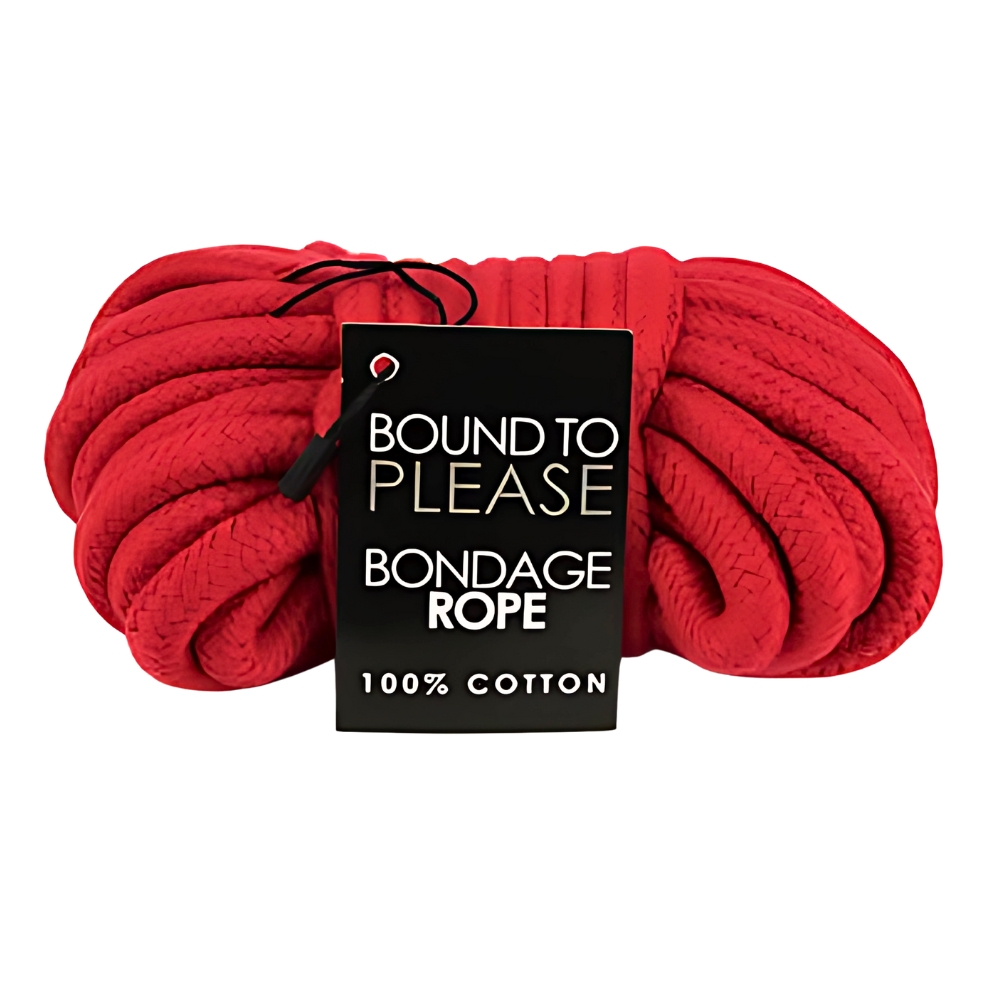
Rope is one of the oldest and most versatile tools in restraint play, and the appeal is easy to understand: no batteries, no mechanism, just a length of material and whatever you choose to do with it. The Bound to Please Bondage Rope offers 10 metres of 100% cotton in a bold red, aimed squarely at couples who want to try tying without committing to specialist gear.
The question worth asking is not whether rope works, but whether this particular rope suits how you intend to use it. Cotton behaves differently to jute, hemp or synthetic nylon, and the choice of material shapes everything from how knots hold to how you look after it afterwards.
The good and the bad
What works
- Soft cotton texture is kind against skin, suiting first-time rope play
- Generous 10-metre length allows more than a single simple tie
- Cotton knots securely yet unties cleanly, easing release
- No power needed, so it is always ready with nothing to charge
- Forgiving and pliable, a sensible material for learning knots
What to be aware of
- Cotton absorbs moisture and can be slower to dry and harder to keep hygienic than synthetic rope
- Softer fibres hold decorative Shibari knots less crisply than jute or hemp
- A single 10-metre length limits more involved multi-column ties without buying more
- Bright red dye is worth rinsing before first use in case of colour transfer
Buy it if
Couples new to rope play who want a comfortable, forgiving material to learn basic ties and simple restraint, and anyone wanting an affordable way to practise Shibari fundamentals before investing in stiffer natural fibres.
Skip it if
Those chasing sharp, sculptural Shibari aesthetics will prefer the crisp bite of jute or hemp, and anyone wanting the lowest-maintenance option may find synthetic nylon quicker to clean and dry.
Design and Material
The rope is 100% cotton, which is the gentlest of the common rope materials against skin. That softness is the whole pitch: it sits comfortably, flexes easily and is unlikely to cause the friction burn that stiffer fibres can if pulled quickly. For anyone nervous about how rope will feel, cotton is the reassuring choice.
The trade-off is inherent to the fibre. Cotton is more elastic and less rigid than jute or hemp, so knots and wraps are comfortable but less defined. If your interest is the precise, geometric look of traditional Shibari, cotton will get you practising the mechanics but won't hold a decorative pattern as sharply as a natural bast fibre.
Length and Use
At 10 metres, this is a proper working length rather than a token offcut. That gives you room for wrapping, binding and building up more than one column, and enough to practise basic Shibari sequences as your confidence grows.
That said, seasoned rope users often work with multiple lengths at once, so while 10 metres is plenty for learning and for straightforward restraint, more ambitious full-body work would eventually call for a second length. As a starting point, though, it is well judged.
Care and Cleaning
This is where cotton asks a little more of you. Being a natural absorbent fibre, it takes on moisture readily, which means it needs to be dried thoroughly after any cleaning and stored dry to avoid mustiness. It is worth giving a bright red rope a rinse before first use in case of any excess dye.
Because it soaks things up, cotton is best kept as one person's rope rather than shared casually, and it cannot be sterilised as easily as a wipe-clean synthetic. Keep it clean, keep it dry, and it will last; neglect it and cotton is less forgiving than nylon on that front.
How It Compares
Against synthetic nylon rope, cotton wins on softness and loses on maintenance: nylon is smoother still, quicker to clean and dry, but some find it too slippery for secure knots. Against jute and hemp, cotton is far kinder to the skin and easier for beginners, but those traditional fibres hold decorative ties with a crispness cotton cannot match.
That places this rope firmly in the beginner-to-intermediate bracket. It is the sensible first rope for most people, and a comfortable everyday choice even for the experienced, provided you accept it is a practical material rather than a showpiece one.
Safety Essentials
Whatever the rope, the safety rules are the same. Keep a pair of blunt-nosed safety scissors within reach so you can free your partner quickly, and never tie so tightly that circulation is restricted; you should always be able to slip a finger under a wrap.
Check in regularly, agree a signal or safe word in advance, and never leave a bound partner unattended. The cotton's easy-untie quality helps here, but scissors are non-negotiable regardless.
The bottom line
As a first rope or a comfortable everyday one, the Bound to Please Bondage Rope is easy to recommend: soft, forgiving, and a sensible length for learning. Just go in knowing that cotton rewards proper drying and storage, and that if crisp decorative Shibari is your real goal, a stiffer natural fibre will serve you better in time.
Frequently asked questions
Is this rope suitable for complete beginners?
Yes. Cotton is one of the most beginner-friendly materials because it is soft, pliable and knots and unties easily. Its gentle texture makes it a reassuring first rope for anyone trying restraint for the first time.
Can I do Shibari with cotton rope?
You can practise Shibari techniques and knots with it, and 10 metres gives you room to do so. Be aware, though, that cotton's softness means it holds decorative, sculptural patterns less crisply than traditional jute or hemp, which experienced practitioners often prefer for their finished look.
How do I clean and care for it?
Because cotton absorbs moisture, it should be cleaned gently and, crucially, dried thoroughly before being stored somewhere dry to prevent mustiness. It is also sensible to rinse a brightly dyed rope before first use in case of colour transfer, and to keep it as one person's rope rather than sharing it.
Do I need any safety equipment to use it?
Yes. Always keep a pair of blunt-nosed safety scissors close by so you can release your partner quickly if needed. Never tie tightly enough to restrict circulation, and check in with each other throughout.
Is 10 metres enough rope?
For learning, for simple restraint and for practising basic ties, 10 metres is a generous and workable length. More elaborate full-body arrangements can call for multiple lengths, so committed enthusiasts may eventually want a second, but as a single starter rope it is well sized.